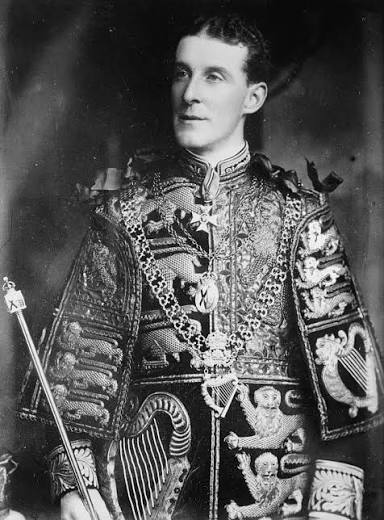
 Sir Arthur Edward Vicars (July 27, 1862 - April 14, 1921) was an English-born genealogist and heraldic expert who became a central figure in one of the most enduring
mysteries of the British administration in Ireland.
Sir Arthur Edward Vicars (July 27, 1862 - April 14, 1921) was an English-born genealogist and heraldic expert who became a central figure in one of the most enduring
mysteries of the British administration in Ireland.Queer Places:
Magdalen College School, Cowley Pl, Oxford OX4 1DZ, United Kingdom
Bromsgrove School, Worcester Rd, Bromsgrove B61 7DU, United Kingdom
St. Peter's Churchyard, Church Rd, Cheltenham GL53 0QJ, United Kingdom
Sir Arthur Edward Vicars (July 27, 1862 - April 14, 1921) was an English-born genealogist and heraldic expert who became a central figure in one of the most enduring
mysteries of the British administration in Ireland.
Born on July 27, 1862, in Leamington Spa, Warwickshire, Vicars was the youngest child of Colonel William Henry Vicars and Jane Gun-Cunninghame. Following his education at Magdalen College School and Bromsgrove School, he moved to Ireland, where he developed a deep passion for genealogy and heraldry. His expertise and persistence led to his appointment as the Ulster King of Arms on February 2, 1893, a prestigious position that placed him at the heart of the Irish heraldic establishment at Dublin Castle. Over the following years, he achieved significant professional success, receiving a knighthood in 1896 and being appointed a Knight Commander of the Royal Victorian Order (KCVO) in 1903. He was a Fellow of the Society of Antiquarians and a trustee of the National Library of Ireland, and he published significant genealogical works, including an index to Irish prerogative wills.
The trajectory of his life changed irrevocably in 1907 with the disappearance of the Irish Crown Jewels—the official insignia of the Order of St. Patrick—which were stored in a safe in his library at the Bedford Tower in Dublin Castle. As the custodian of the jewels, Vicars faced intense scrutiny. Despite his vehement protests of innocence, a commission of inquiry found him negligent in his duties, and he was dismissed from his post in 1908. Following the scandal, he left Dublin and retired to Kilmorna House near Listowel, County Kerry. In 1917, he married Gertrude Wright, though the union produced no children. His final years were marked by instability and the political volatility of the Irish War of Independence. In May 1920, his home was raided by armed men, and on April 14, 1921, he was abducted from Kilmorna House, which was subsequently set on fire, and he was executed by the Irish Republican Army, who accused him of being an informer.
In the decades following the disappearance of the jewels, his legacy became deeply entwined with historical rumors regarding his personal life and the political culture of Dublin Castle. During the investigation into the 1907 theft, gossip circulated about a so-called "gay clique" or secret society within the castle administration. Vicars was often at the center of these rumors, which alleged that he and his second-in-command, Francis Shackleton (the brother of explorer Ernest Shackleton), were involved in a romantic relationship. These rumors suggested that the theft might have been covered up by high-ranking officials to protect members of the establishment from the legal and social repercussions that would have followed a public exposure of homosexual activity at the time.
Historians have noted that these rumors were heavily influenced by the era's attitudes toward homosexuality, which was then a criminal offense. Vicars himself maintained his innocence regarding the theft until his death, eventually using his last will and testament to accuse Francis Shackleton of being the true culprit, a charge he believed had been shielded by the British authorities. His will, which contained these explosive allegations, was kept private for over fifty years, cementing his status as a controversial and tragic figure in Irish history. While the specific nature of his private life remains a subject of speculation and historical debate, his name is frequently cited in studies of queer history in Ireland due to the salacious and pervasive nature of the rumors that characterized the investigation into his downfall.
References:
Support this project
This website is a passion project researched, developed, and funded entirely by me. If you find the content valuable and would like to help support the ongoing research and hosting costs, any contribution is deeply appreciated.
Thank you for keeping this independent resource alive!
My books on Amazon: Elisa Rolle's books